
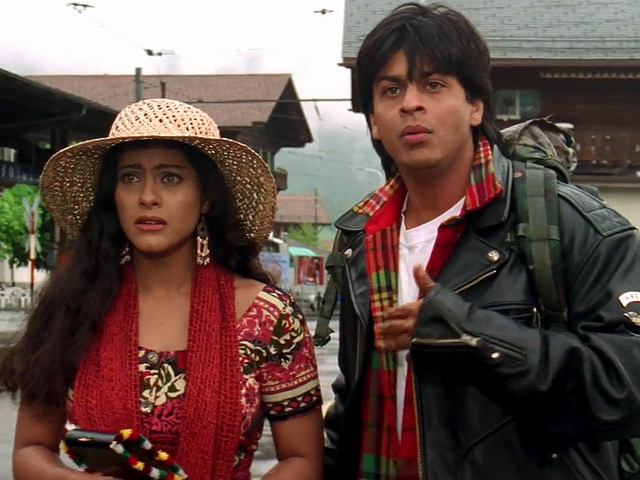
Raj and Simran miss their train in Europe.
Simran panics.
But Raj says,
“Bade bade deshon mein aisi chhoti chhoti baatein hoti rehti hain Senorita.”
The scene is shot as a potential crisis moment.
Background uncertainty. Emotional tension.
But Raj reframes the event as insignificant in the larger journey.
Tool Mapped: Relevant Cost Analysis & Sunk Cost Principle
What Happened Strategically?
Train missed ? Cost already incurred (ticket, time, plan disruption)
Situation irreversible
Emotional escalation possible
Raj shifts focus from loss to next alternative
This is a classic case of:
Sunk Cost Fallacy Avoidance
Decision based only on future incremental impact
Strategic composure in uncertainty
Tenali Explains,
“Maharaj… when a cart breaks on the road, do we burn the kingdom?
The missed train is a sunk cost. It cannot be reversed. If we let emotion govern policy, we convert a minor variance into a strategic failure.
In statecraft and enterprise alike, only future costs and future revenues are relevant for decision making.”
Raj demonstrated:
Ignoring irrelevant past cost
Preventing behavioural bias
Protecting morale (intangible asset)
Moving toward alternative value creation
In strategic cost management:
Past committed cost ? Irrelevant
Emotional overreaction ? Behavioural inefficiency
Calm reframing ? Leadership control system
The dialogue reflects managerial maturity:
Do not magnify immaterial variances.
Preserve decision clarity.
Focus on next best alternative.
If Maharaj had panicked over every missed train, the kingdom’s strategy would collapse under noise instead of data.