
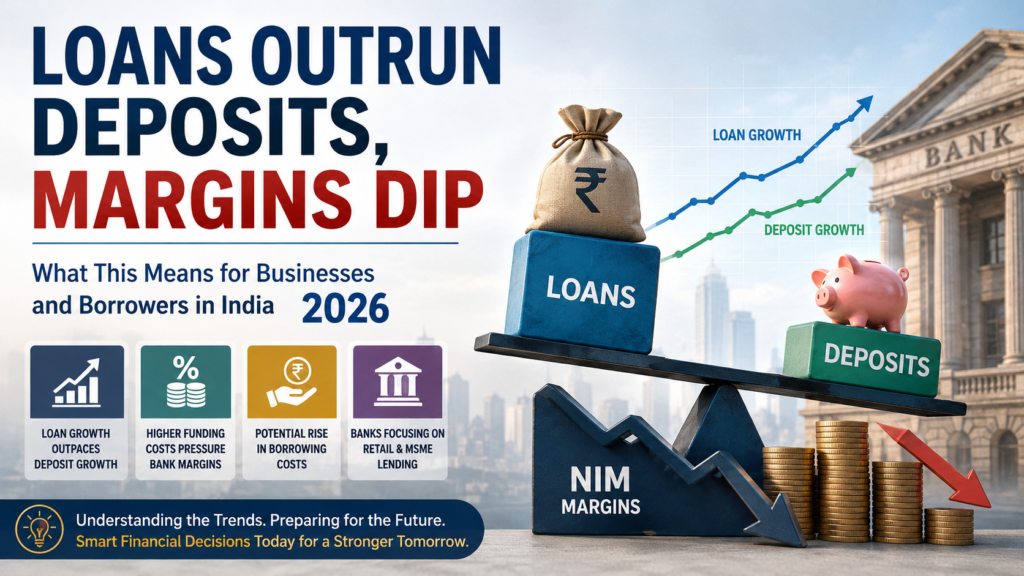
India’s banking sector is witnessing a major shift in 2026 as loan growth continues to outpace deposit growth. Several leading banks have reported pressure on profit margins due to rising funding costs and slower deposit mobilisation. This development is becoming one of the most discussed topics in the Indian financial sector because it directly impacts lending rates, business borrowing costs, banking profitability, and overall economic growth.
Recent reports indicate that banks are increasingly relying on higher-cost deposits and market borrowings to maintain credit growth. As a result, Net Interest Margins (NIMs), one of the key profitability indicators for banks, are beginning to shrink.
Why Are Loans Growing Faster Than Deposits?
India’s credit demand has remained strong across retail loans, MSME financing, housing loans, and infrastructure funding. Businesses continue expanding operations while consumers are borrowing actively for homes, vehicles, and personal finance needs.
However, deposit growth has not kept pace with this rising demand for credit. One reason is that investors are increasingly moving funds towards mutual funds, equities, and alternative investment products instead of traditional bank deposits. Another factor is intense competition among banks for retail deposits.
This mismatch is creating liquidity pressure within the banking system. Banks are therefore forced to raise deposit rates or borrow through costlier instruments such as Certificates of Deposit (CDs).
How Shrinking Margins Affect Banks and Borrowers
Net Interest Margin represents the difference between the interest banks earn on loans and the interest they pay on deposits. When deposit costs rise faster than lending yields, margins decline.
Several major banks, including State Bank of India, have recently highlighted pressure on margins despite strong loan growth. Reports suggest that rising funding costs are starting to impact profitability across the banking sector.
For businesses and borrowers, this trend could result in:
- Higher borrowing costs in coming months
- Stricter lending standards
- Reduced availability of low-interest loans
- Increased focus on profitable loan segments such as retail and MSME lending
Banks are now shifting towards higher-yield segments to protect profitability. Retail and MSME loans are expected to remain priority sectors for many lenders.
Banking Sector Faces a Structural Transition
Industry leaders are increasingly indicating that the era of very high banking margins may gradually decline as India’s economy matures. According to banking executives, Indian banks may need to adapt to thinner margins in the future while focusing more on operational efficiency, fee income, and digital banking services.
This transition is important because the banking sector remains the backbone of India’s economic growth. Any sustained pressure on margins can influence lending capacity, investment activity, and consumption patterns across industries.
At the same time, strong credit demand also signals economic resilience. Sectors such as infrastructure, manufacturing, MSMEs, and retail consumption continue to support India’s growth story despite global uncertainties.
What Should Businesses Watch Closely?
Businesses, especially MSMEs and growing enterprises, should closely monitor:
- Changes in lending interest rates
- Bank loan eligibility norms
- Working capital financing costs
- Availability of long-term project finance
- RBI policy signals on liquidity and interest rates
Companies that proactively improve cash flow management and optimise debt structures may be better positioned if borrowing costs rise further during FY 2026-27.
What Is Net Interest Margin (NIM)?
Net Interest Margin (NIM) is the difference between the interest income earned by banks on loans and the interest paid on deposits, expressed as a percentage of earning assets. It is a key indicator of a bank’s profitability.
Why Are Deposits Growing Slower Than Loans?
Deposits are growing slower because many investors are shifting money towards mutual funds, stock markets, and alternative investment products offering potentially higher returns compared to traditional savings accounts and fixed deposits.
How Can Higher Deposit Costs Affect Borrowers?
When banks pay higher interest on deposits, their funding costs increase. To maintain profitability, banks may raise lending rates, making loans more expensive for businesses and individuals.
Why Are MSME Loans Becoming Important for Banks?
MSME loans generally offer better yields compared to large corporate lending. Banks are increasingly focusing on MSME financing to support profitability amid shrinking margins.
Can RBI Intervention Improve Liquidity Conditions?
Yes. The Reserve Bank of India can improve liquidity through repo rate changes, liquidity injections, CRR adjustments, and other monetary policy measures to support banking system stability.
FAQs
1. Why are Indian banks facing margin pressure in 2026?
Indian banks are facing margin pressure because loan growth is higher than deposit growth, forcing banks to depend on more expensive funding sources.
2. What happens when loans grow faster than deposits?
Banks may face liquidity pressure, increase deposit rates, borrow from markets, and potentially raise lending rates for customers.
3. Which sectors are driving loan growth in India?
Retail loans, housing finance, MSME lending, vehicle loans, and infrastructure financing are major contributors to credit growth.
4. Will home loan and business loan interest rates rise?
There is a possibility of gradual increases in lending rates if deposit costs continue rising and liquidity tightens further.
5. How are banks managing shrinking margins?
Banks are focusing on retail lending, MSME financing, fee-based income, and operational efficiency improvements.
6. Why are customers investing less in bank deposits?
Many investors are moving towards equity markets, SIPs, mutual funds, and other financial products offering potentially higher returns.
7. Is this situation risky for India’s banking sector?
Currently, it reflects a structural funding challenge rather than a crisis. However, sustained imbalance between loans and deposits may create long-term pressure on banking profitability and liquidity.