
“Maharaj, every retailer is selling products. Why are so many struggling while DMart keeps generating profits?”
Tenali smiled.
“Because most retailers think they are in the retail business. DMart thinks it is in the cost business.”
Maharaj looked puzzled.
“But everyone buys products and sells them to customers.”
“True,” said Tenali. “But look deeper.
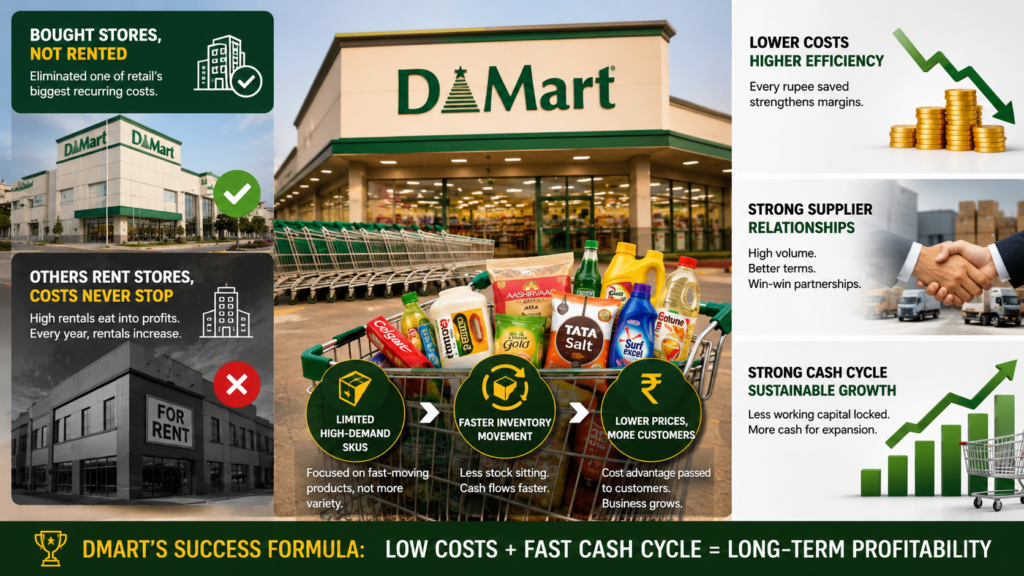
Many retailers pay huge monthly rents. Every year, rentals increase. Sales may fluctuate, but rent never waits.”
“So what did DMart do differently?” asked Maharaj.
“They removed one of retail’s biggest recurring costs.”
“How?”
“They bought stores instead of renting them.”
Maharaj paused.
“That must require huge investment.”
“Exactly. But that investment created long-term cost advantages.”
Tenali continued.
“Then came the second move. While competitors stocked thousands of products, DMart focused on limited high-demand SKUs.”
“Less variety?”
“Yes. But faster movement.”
“And why is that important?”
“Because inventory sitting on shelves is money sleeping.”
Maharaj nodded.
“So products moved faster?”
“Much faster. Inventory converted into cash quickly. Less working capital got locked. Suppliers got volume. Customers got lower prices.” Tenali answered.
“And those lower prices attracted more customers.”
“Exactly.”
Tenali added,
“Many retailers focus on increasing sales. DMart focused on reducing costs and accelerating cash cycles. Sales followed naturally.”
Maharaj smiled.
“So the real retail battle isn’t fought at the billing counter.
It’s fought in rent agreements, inventory rooms, and working capital decisions.”