
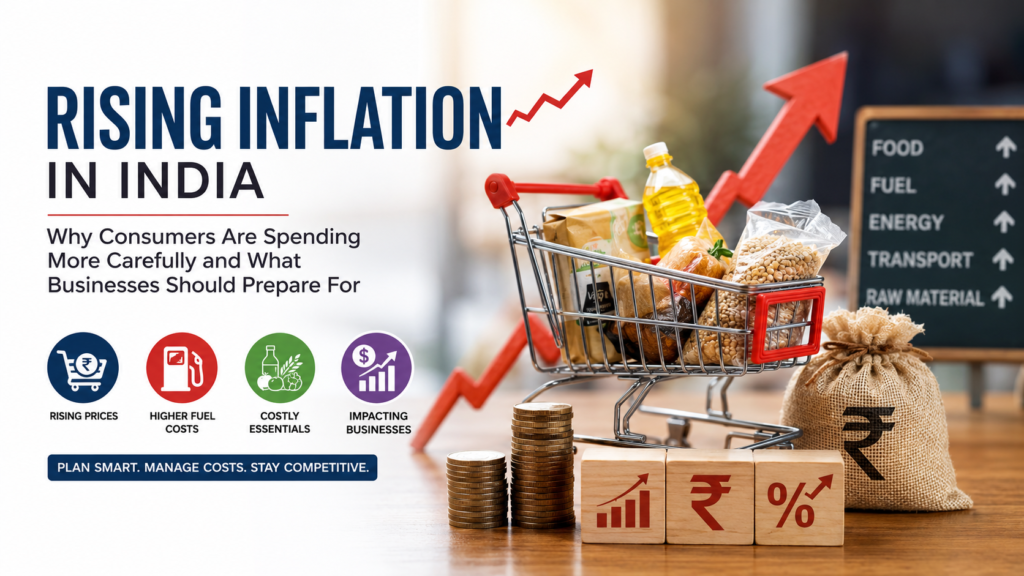
Indian consumers are becoming increasingly cautious with their spending as inflationary pressures begin to affect household budgets. According to Procter & Gamble (P&G) India, rising costs of food, energy, healthcare and other essentials are changing consumer behaviour, leading people to prioritize value and delay discretionary purchases. This trend is important for MSMEs, retailers, distributors and manufacturers across Pune, PCMC and Maharashtra because consumer sentiment directly influences demand and profitability.
Inflation Is Changing Consumer Psychology
P&G India has observed that even financially comfortable consumers are becoming more disciplined in their spending decisions. Rising prices are forcing households to reassess priorities and focus on essential expenses.
Increasing crude oil prices and supply chain disruptions have raised the cost of key raw materials such as plastics and packaging. FMCG companies have already implemented price increases in several categories, while delayed monsoons and commodity inflation are creating additional uncertainties. These developments are putting pressure on consumption growth in both urban and rural markets.
Impact on Businesses and MSMEs
Businesses that depend on consumer spending may experience slower demand growth. Customers are increasingly seeking value for money and are becoming more selective before making purchases.
Manufacturers, traders and retailers should prepare for:
- Rising input costs.
- Pressure on profit margins.
- Increased customer price sensitivity.
- Shift towards affordable products and smaller pack sizes.
- Need for better inventory and cost management.
Several companies are responding by increasing prices, improving operational efficiency and focusing on product innovation to maintain competitiveness.
Commodity Prices and Global Factors Are Adding Pressure
The ongoing geopolitical tensions in West Asia have pushed up crude oil prices and transportation costs. These increases affect packaging materials, logistics expenses and production costs across industries.
India’s retail inflation rose to 3.9% in May 2026, mainly due to higher food and fuel prices. Economists expect inflationary risks to remain elevated over the coming months, especially if commodity prices remain volatile or monsoon conditions become unfavorable.
How MSMEs Can Respond to Inflation
Businesses should focus on protecting margins without losing customers. Some practical measures include:
- Reviewing product profitability regularly.
- Controlling wastage and operating costs.
- Improving inventory management.
- Strengthening working capital planning.
- Offering value-based products instead of competing only on price.
- Diversifying suppliers to reduce procurement risks.
- Monitoring customer demand patterns closely.
Businesses that adapt quickly to changing consumer behaviour are likely to perform better during periods of inflation.
What Does Rising Inflation Mean for Indian Consumers?
Higher inflation reduces purchasing power and makes consumers more cautious about spending. Households tend to prioritize essential goods and become more value conscious.
Why Are FMCG Companies Concerned About Inflation?
Rising commodity, packaging and logistics costs increase production expenses while cautious consumers make it difficult to pass on the entire cost increase through higher prices.
How Does Crude Oil Affect Everyday Prices?
Crude oil influences transportation, packaging and manufacturing costs. Higher oil prices often lead to cost increases across many consumer products.
When Can Inflation Impact Small Businesses?
The impact becomes visible when input costs rise faster than selling prices, leading to margin pressure and slower customer demand.
Where Are Inflation Pressures Coming From?
Major factors include:
- Rising food prices.
- Higher energy costs.
- Commodity inflation.
- Global supply chain disruptions.
- Geopolitical tensions.
- Weather-related uncertainties affecting agricultural output.
FAQs
Will inflation affect demand for consumer goods in 2026?
Yes. Consumers are becoming more selective and spending cautiously, which may slow demand growth in several sectors.
Which sectors are most vulnerable to inflation?
FMCG, retail, manufacturing, logistics, automobiles and businesses dependent on discretionary spending are particularly exposed.
Can MSMEs maintain profitability during inflation?
Yes. Better cost control, pricing strategies, inventory management and process improvements can help protect margins.
Why are many companies increasing prices?
Higher raw material, fuel and logistics costs are forcing companies to pass on a portion of the increased expenses to consumers.
How does delayed monsoon affect inflation?
Poor or delayed rainfall can increase food prices and weaken rural demand, adding to inflationary pressures.
Should businesses focus more on premium products or affordable products?
The answer depends on customer segments, but value-oriented offerings generally perform better during inflationary periods.
What should SME owners monitor during rising inflation?
They should closely track raw material costs, customer demand, inventory levels, working capital and product profitability.
Conclusion
The warning from P&G India highlights a broader shift occurring in the economy. Inflation is not only increasing costs for businesses but is also changing consumer spending habits. For MSMEs and growing businesses in Maharashtra, the focus should now be on cost efficiency, profitability management and delivering superior value to customers. Businesses that proactively adapt to these changes will be better positioned to navigate the uncertain economic environment ahead.