
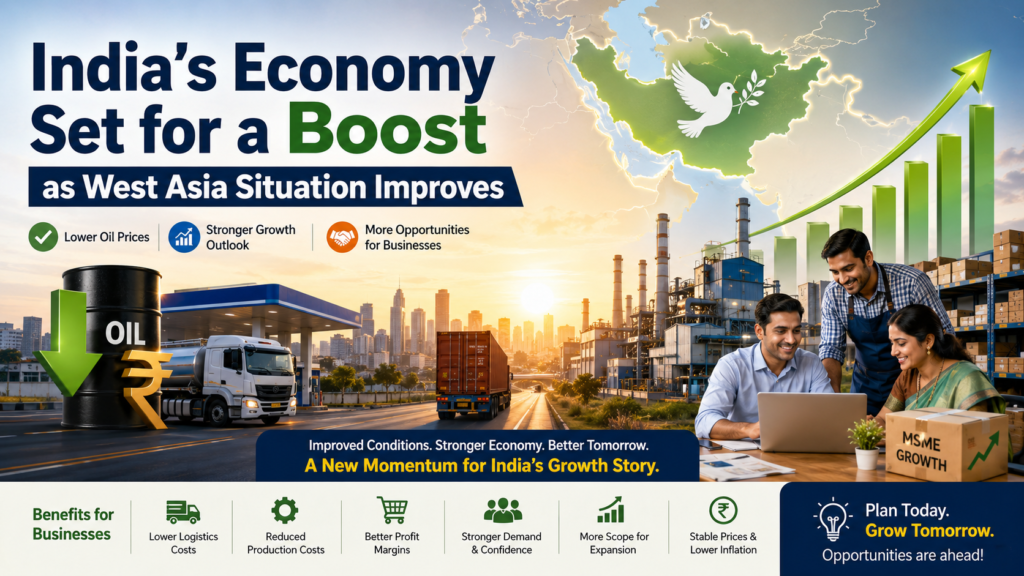
India’s economic outlook has turned more optimistic as geopolitical tensions in West Asia show signs of easing. With crude oil prices declining and supply chains stabilising, the Government expects stronger economic momentum in the coming months. For businesses across Pune, PCMC, Chakan, Bhosari and other industrial hubs, this could translate into lower operating costs, improved demand and a more stable business environment. Source – The Times of India
For MSMEs, manufacturers, traders and service providers, global developments often influence local profitability. A reduction in energy prices affects transportation, manufacturing, logistics and inflation, making it easier for businesses to plan investments and expansion.
Why Does the Improvement in West Asia Matter to India’s Economy?
West Asia is one of India’s most important economic partners. India imports a significant portion of its crude oil and natural gas from the region. During periods of conflict, businesses face higher fuel costs, increased freight charges and supply chain disruptions.
As tensions have eased, crude oil prices have softened, reducing inflationary pressures on the Indian economy. Government officials have indicated that first-quarter economic indicators already point towards healthy momentum, with expectations of stronger growth ahead.
Lower energy costs generally benefit:
- Manufacturing industries
- Transport and logistics businesses
- Exporters and importers
- Retail businesses
- Construction sector
- Small and medium enterprises
How Lower Oil Prices Benefit Indian Businesses
Energy costs influence almost every industry.
A decline in crude oil prices can create several positive effects:
- Reduced transportation and freight expenses
- Lower manufacturing input costs
- Stable prices of industrial raw materials
- Better profit margins
- Improved consumer purchasing power
- Lower inflationary pressure
- Greater confidence for business expansion
Businesses that were postponing investments due to uncertainty may now find conditions more favourable.
Positive Economic Indicators Supporting Growth
Apart from improving geopolitical conditions, several domestic indicators have strengthened India’s economic outlook.
Recent industrial production data showed strong growth led by manufacturing and electricity generation, reflecting resilient domestic demand. Government officials have also highlighted encouraging first-quarter economic momentum.
Some positive indicators include:
- Strong manufacturing growth
- Stable domestic demand
- Improved industrial production
- Better business confidence
- Declining inflation risks due to lower energy prices
These factors together support expectations of stronger GDP growth during the financial year.
Opportunities for MSMEs
Small businesses are often the first to feel the impact of changing economic conditions.
An improving macroeconomic environment can help MSMEs by:
- Reducing operating expenses
- Improving customer demand
- Lowering financing risks through stable inflation
- Making inventory planning easier
- Supporting capacity expansion
Businesses should use this period to strengthen cash flow management, improve operational efficiency and evaluate growth opportunities instead of waiting for uncertainty to return.
Risks Businesses Should Still Monitor
Although the outlook has improved, businesses should continue monitoring global developments.
Important areas include:
- Future geopolitical developments
- International crude oil prices
- Global shipping costs
- Exchange rate movements
- Export demand from major economies
Business planning should remain flexible even during improving economic conditions.
What Should Businesses Do Now?
This is an appropriate time for business owners to review their financial strategy.
Consider:
- Reviewing pricing policies
- Negotiating long-term supplier contracts
- Planning capital expenditure
- Improving inventory management
- Strengthening working capital
- Exploring expansion opportunities if demand improves
Businesses that prepare during favourable conditions are generally better positioned to manage future uncertainties.
What is driving the government’s positive outlook on the economy?
The easing of geopolitical tensions in West Asia, falling crude oil prices and encouraging domestic economic indicators have improved confidence in India’s growth prospects.
Why does West Asia affect India’s economy?
India imports a large share of its crude oil and natural gas from West Asia. Any disruption in the region impacts fuel prices, inflation, transportation costs and industrial production.
How do lower crude oil prices help MSMEs?
Lower fuel costs reduce logistics expenses, manufacturing costs and inflation, allowing businesses to improve profitability and competitiveness.
When can businesses expect economic benefits?
The government expects stronger economic momentum during the current financial year as global conditions improve and domestic indicators remain positive.
Where will the biggest benefits be seen?
Manufacturing, logistics, transportation, construction, retail, exports and MSMEs are likely to benefit the most from lower energy costs and improved business confidence.
Frequently Asked Questions (FAQs)
1. Will lower crude oil prices reduce business operating costs?
Yes. Transportation, logistics, manufacturing and energy-intensive businesses generally benefit from lower fuel prices.
2. Can easing geopolitical tensions improve exports?
Yes. Stable shipping routes and lower freight costs can support international trade and export competitiveness.
3. Should MSMEs delay expansion plans due to global uncertainty?
Businesses should remain cautious but may consider phased expansion if supported by demand, cash flow and financial stability.
4. How does lower inflation help consumers?
Lower inflation improves purchasing power, which can increase consumer spending and support business sales.
5. Which sectors benefit the most from lower oil prices?
Manufacturing, logistics, aviation, transport, chemicals, retail and industrial businesses generally benefit significantly.
6. Can businesses expect interest rates to remain supportive?
Lower inflation reduces pressure on monetary policy, although future decisions depend on overall economic conditions and inflation trends.
7. What should MSMEs focus on during improving economic conditions?
They should improve operational efficiency, strengthen working capital, optimise costs and prepare for sustainable growth rather than relying solely on favourable external conditions.