
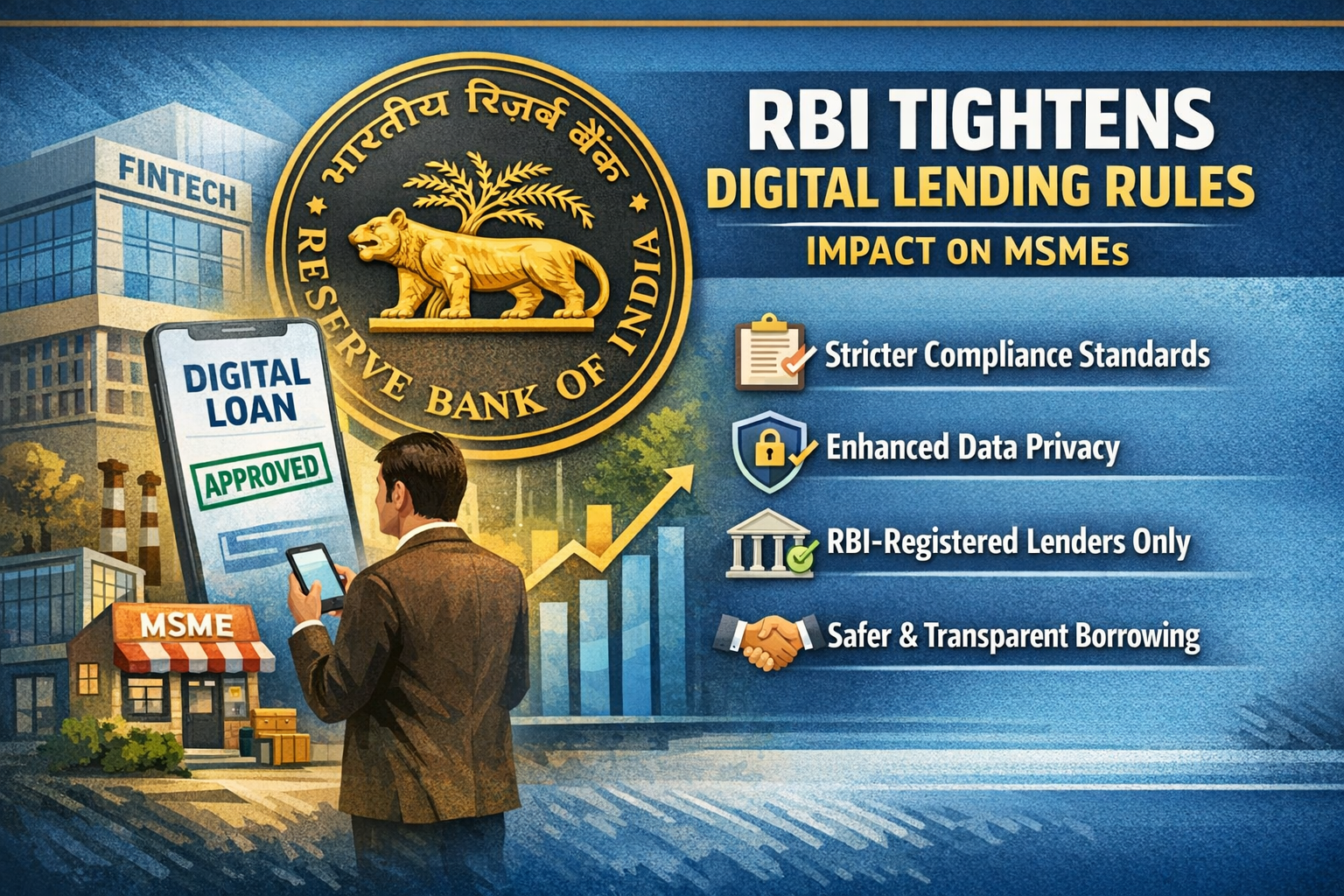
1. Background – Why This Topic Matters
In the last few years, digital lending apps and fintech platforms have become a major funding source for micro and small businesses, especially in industrial clusters like Pimpri–Chinchwad, Chakan, and Bhosari.
However, due to:
- Rising complaints of hidden charges
- Misuse of borrower data
- Aggressive recovery practices
the Reserve Bank of India (RBI) has strengthened digital lending regulations in 2025–26.
This is currently one of the most searched topics among:
- Small manufacturers
- Traders using instant working capital loans
- Startups relying on fintech NBFCs
2. Key Regulatory Changes (Latest RBI Directions)
A. Direct Loan Disbursal & Repayment
- Loans must be directly disbursed to borrower’s bank account
- No pass-through or third-party wallets allowed
B. Transparency in Charges
- All fees must be disclosed upfront in a Key Fact Statement (KFS)
- No hidden charges post disbursement
C. Data Privacy Norms
- Lending apps cannot access:
- Contacts
- Photos
- Personal files
- Only necessary financial data can be collected
D. Cooling-Off Period
- Borrowers get a grace period to exit loan without penalty
E. Regulated Entities Only
- Loans must be backed by:
- RBI-registered NBFCs or Banks
- Unregulated apps are effectively restricted
3. Impact on MSMEs – Practical Analysis
| Area | Positive Impact | Challenge |
|---|---|---|
| Loan Transparency | Clear cost structure | Slight increase in compliance documentation |
| Borrower Safety | Reduced harassment risk | Slower loan processing |
| Funding Access | More reliable lenders | Fewer “instant” loan options |
| Data Security | Better privacy | Limited app-based convenience |
4. Strategic Insights for Business Owners
1. Shift from “Speed” to “Sustainability”
Earlier, businesses preferred:
- Instant loans in 10 minutes
Now focus should be:
- Structured funding with clear repayment visibility
2. Evaluate True Cost of Borrowing
Instead of only interest rate, evaluate:
- Processing fees
- Platform charges
- Penal interest clauses
3. Build Banking Relationships
With tighter fintech norms:
- Traditional banks & NBFCs regain importance
- Maintain:
- Proper financial statements
- Banking discipline
- Credit history
4. Avoid Unregistered Apps
Red flags:
- No NBFC/bank backing
- Asking for contact access
- No loan agreement
5. Opportunities Emerging for MSMEs
Despite stricter rules, this change creates long-term benefits:
- Formalisation of credit market
- Better credit scoring systems
- Increased trust in digital lending ecosystem
- Entry of reputed fintech + bank partnerships
6. Practical Action Plan
Immediate Steps for MSME Owners:
- Review all existing digital loans
- Check KFS and actual cost
- Exit high-cost loans during cooling-off period (if applicable)
- Shift to regulated lenders
Medium-Term Strategy:
- Strengthen financial records
- Improve credit rating
- Explore schemes linked with:
- MSME financing platforms
- Co-lending models
7. Conclusion
The RBI’s tightening of digital lending norms is not a restriction—it is a reset of the lending ecosystem.
For MSMEs:
- Short-term inconvenience
- Long-term stability and credibility
Businesses that adapt early by choosing transparent and compliant funding sources will gain a competitive advantage in both cost control and financial discipline.
 WhatsApp