
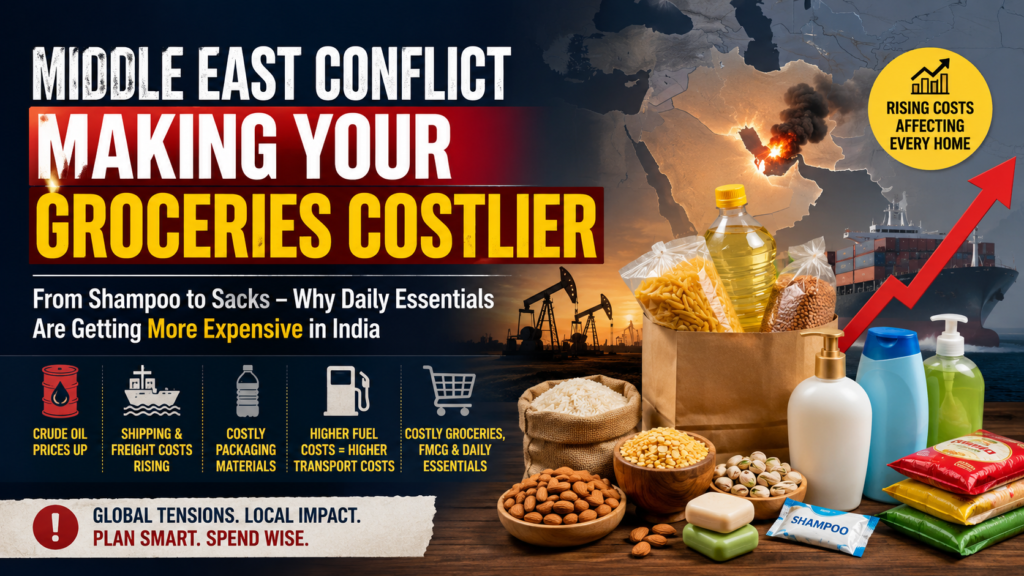
Indian households are beginning to feel the financial impact of the ongoing Middle East conflict far beyond fuel prices. What started as a geopolitical crisis is now affecting grocery bills, household products, packaging costs, transportation expenses, and even furniture prices. From shampoo sachets to cooking oil and pulses, the cost of everyday essentials is gradually rising across India due to disruptions in global supply chains and crude oil-linked raw materials. For small businesses and families in Maharashtra and across India, understanding these changes is becoming increasingly important.
How a War Thousands of Kilometres Away Is Affecting Indian Households
India imports a major portion of its crude oil and several petrochemical-based raw materials from regions connected to the Middle East. The ongoing conflict has disrupted critical shipping routes like the Strait of Hormuz and Red Sea trade corridors, leading to higher freight charges, insurance premiums, and delays in cargo movement.
As transport and import costs rise, Indian manufacturers are facing pressure on margins. Many companies that manufacture soaps, shampoos, packaged foods, edible oils, plastics, paints, and packaging materials depend heavily on petroleum-linked inputs. This means even non-fuel products are becoming more expensive.
Several FMCG companies have already indicated rising raw material and packaging costs due to the crisis. Products like hair oil, soaps, and packaged groceries are witnessing cost pressures because petrochemical derivatives are widely used in plastic bottles, laminates, packaging films, and chemicals.
Why Groceries and Daily Essentials May Continue to Become Costlier
The immediate impact is visible in cooking essentials and household consumables. Freight disruptions are increasing the landed cost of imported pulses, edible oils, dry fruits, and packaging materials. Industry reports indicate sharp increases in prices of imported almonds, pista, sunflower oil, and other commodities.
Fuel price hikes are also increasing logistics costs across India. As diesel and petrol become costlier, transportation expenses for wholesalers, retailers, and delivery operators rise, eventually impacting the final retail price paid by consumers.
Even products that seem unrelated to oil are affected because modern manufacturing depends heavily on petroleum-based chemicals. Foam, plastic containers, adhesive materials, detergents, synthetic fibres, and packaging all become costlier when crude oil prices rise. This is why products like shampoo sachets, soaps, snacks, and even grocery sacks are witnessing price pressure.
For Indian SMEs, especially grocery distributors, retailers, transporters, and FMCG dealers, working capital pressure may increase if prices continue rising over the coming months.
Impact on Small Businesses and Retailers in India
Micro and small businesses are often the first to feel the effect of inflationary shocks. Retailers may face:
- Reduced customer purchasing power
- Higher inventory carrying costs
- Increased transportation charges
- Margin pressure due to delayed price revisions
- Volatile supplier pricing
Businesses dealing in packaging materials, plastics, FMCG distribution, logistics, furniture, and food processing may particularly experience cost fluctuations. Some companies are already considering gradual price hikes of 10–15% in certain categories due to increased input costs.
For households, the impact may appear small initially — a few rupees extra on oil, groceries, soaps, or shampoos — but collectively these increases can significantly affect monthly budgets over time.
What Indian Consumers and Businesses Should Watch Closely
The biggest factor to monitor is crude oil prices and shipping disruptions in the Middle East region. If geopolitical tensions continue for a prolonged period, India could witness:
- Further increase in petrol and diesel prices
- Higher inflation in FMCG products
- Rising transport and delivery charges
- Increased packaging costs
- Pressure on household savings and SME profitability
India’s dependence on imported energy makes the economy sensitive to global disruptions. Economists are also warning that inflationary pressure may complicate monetary policy decisions and business planning in the coming months.
What products are becoming expensive due to the Middle East conflict?
Products linked directly or indirectly to crude oil and imported logistics are witnessing price pressure. These include:
- Cooking oil
- Pulses
- Shampoo and soaps
- Packaged food items
- Plastic packaging
- Furniture foam and adhesives
- Dry fruits
- Transport-related services
Why are shampoo and grocery prices increasing?
Shampoo bottles, sachets, and packaging materials use petrochemical-based plastics and chemicals. Rising crude oil prices and freight costs are increasing manufacturing expenses, which companies may pass on to consumers.
How does crude oil affect grocery prices?
Crude oil impacts transportation, packaging, fertilizers, manufacturing, and logistics. When oil becomes expensive, the cost of producing and transporting groceries also rises.
Can the Middle East conflict affect Indian inflation?
Yes. Rising fuel prices, import costs, and supply chain disruptions can increase inflation in India, especially in food, FMCG, and transportation sectors.
Will petrol and diesel prices increase further?
If geopolitical tensions continue and crude oil supply remains disrupted, fuel prices may continue to remain volatile or rise further depending on global market conditions.
How can small businesses prepare for rising costs?
Small businesses should:
- Monitor inventory carefully
- Reduce wastage
- Review pricing periodically
- Negotiate supplier contracts
- Improve cash flow management
- Avoid overstocking volatile products
FAQs
How is the Middle East conflict affecting Indian households?
The conflict is increasing fuel, freight, packaging, and import costs, which ultimately affects grocery prices and daily household expenses.
Why are packaging costs increasing in India?
Packaging materials like plastics, laminates, and chemical adhesives are linked to petroleum products, whose prices rise when crude oil becomes expensive.
Which industries are most affected by this crisis?
FMCG, logistics, food processing, furniture, retail distribution, packaging, and transport sectors are among the most affected industries.
Can grocery inflation continue for several months?
Yes. If shipping disruptions and oil price volatility continue, grocery inflation may persist over the medium term.
How are Indian businesses responding to rising input costs?
Many companies are absorbing part of the cost, reducing margins temporarily, optimizing packaging, or gradually increasing selling prices.
Is this situation affecting only India?
No. Many countries globally are witnessing inflationary pressure due to disrupted oil supply routes and increased freight costs.
Why are imported dry fruits becoming expensive?
Supply disruptions from Iran and nearby regions, along with higher shipping and insurance costs, are increasing prices of imported dry fruits in India.