
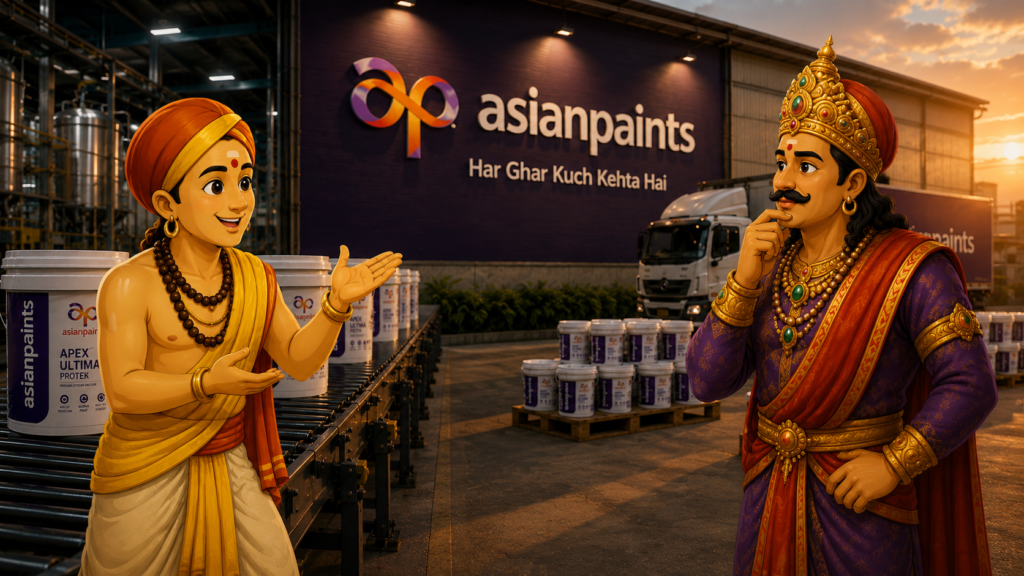
“Asian Paints became India’s biggest paint company because its products were better.” Maharaj was telling a merchant.
Tenali smiled, “If quality alone created dominance, why would dealers stay loyal when competitors offered higher margins?”
“Maybe… aggressive discounts?” Maharaj guessed.
Tenali shook his head. “Discounts attract dealers. They rarely keep them.”
The merchant whispered, “Then what made them indispensable?”
Tenali picked up a paint shade card. “Availability.
The real game wasn’t selling paint. It was ensuring the right shade reached the right dealer before the customer asked.”
Maharaj leaned forward. “But with thousands of colours and endless SKUs, how was that even possible?”
“Data,” Tenali replied. “They used analytics to predict demand, integrated manufacturing with distribution, and replenished dealers before shelves emptied.”
“And Beautiful Homes?” Maharaj asked.
“A clever expansion,” Tenali nodded. “Once customers trusted the paint, Asian Paints quietly entered decor, kitchens, wardrobes, and home improvement. Building an ecosystem instead of chasing one-time sales.”
“So there were other reasons for Asian Paints to succeed.” the merchant said.
Tenali replied to sum up the discussion, “Yes. Market leaders don’t merely manufacture products. They manufacture certainty.”