
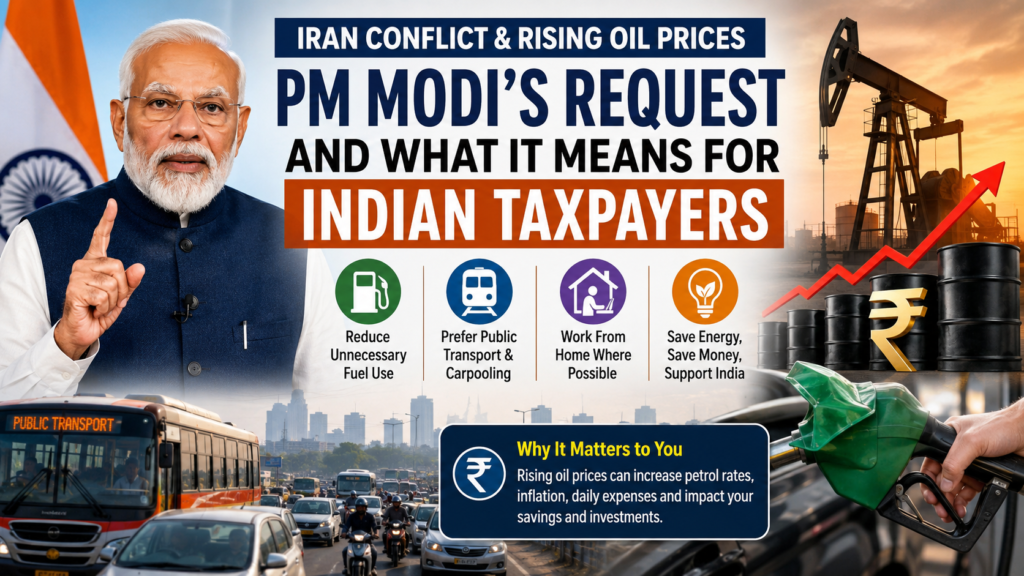
Prime Minister Narendra Modi reportedly urged Indians to avoid unnecessary fuel consumption, prefer public transport where possible, reduce non-essential travel, and support energy-saving practices as global crude oil uncertainty increases.
While the issue appears international, its financial impact can directly reach Indian households, salaried taxpayers, commuters, and small businesses. Rising crude oil prices affect everything from petrol bills to inflation and household budgets.
Why PM Modi’s Appeal Matters to Common Taxpayers
India imports a large portion of its crude oil requirements. Any disruption in global oil supply or increase in crude prices can impact:
- Petrol and diesel prices
- LPG cylinder costs
- Transportation charges
- Inflation in food and daily essentials
- Airfare and logistics costs
This is why the government is encouraging energy conservation and responsible fuel usage during periods of global uncertainty.
What Requests Were Made to Citizens?
According to reports linked to the ongoing energy concerns, the broader public messaging includes:
Reduce Unnecessary Fuel Consumption
Citizens are being encouraged to:
- Avoid unnecessary driving
- Combine travel trips
- Use fuel-efficient transportation
- Reduce wastage of diesel and petrol
For taxpayers, this directly helps control monthly fuel expenses.
Prefer Public Transport & Carpooling
Using:
- Metro services
- Local transport
- Carpool systems
- Shared office commuting
can help reduce overall fuel demand and personal transportation costs.
Encourage Work From Home Where Possible
Companies and employees may increasingly adopt hybrid work models to:
- Reduce fuel usage
- Lower traffic congestion
- Cut commuting expenses
For salaried individuals in metro cities, this can significantly reduce:
- Petrol expenses
- Parking costs
- Vehicle maintenance
- Daily travel stress
How Rising Crude Oil Prices Affect Indian Families
1. Household Budgets Come Under Pressure
Even small increases in fuel prices can increase:
- Grocery costs
- Delivery charges
- School transport fees
- Cab fares
- Travel expenses
Middle-class families often feel this impact quickly because fuel costs indirectly affect almost every product and service.
2. Inflation Reduces Purchasing Power
When crude oil prices rise globally:
- Transportation becomes expensive
- Manufacturing costs increase
- Businesses pass on higher costs to consumers
As a result, taxpayers may experience:
- Reduced savings potential
- Higher monthly expenses
- Pressure on disposable income
Impact on Small Businesses & Self-Employed Professionals
Small businesses may face:
- Increased logistics expenses
- Higher raw material transportation costs
- Reduced consumer demand
- Margin pressure
Retailers, distributors, manufacturers, transporters, and delivery-based businesses are usually among the first affected.
Could Fuel Prices Increase in India?
Fuel pricing depends on multiple factors:
- International crude oil prices
- Government taxes
- Rupee-dollar exchange rate
- Oil marketing company pricing decisions
If geopolitical tensions continue for a longer period, pressure on domestic fuel prices may increase.
What Should Taxpayers Do Practically?
Review Monthly Fuel Spending
Track:
- Daily commuting costs
- Vehicle usage patterns
- Delivery and travel expenses
Build Emergency Savings
Inflationary periods can increase pressure on monthly finances. Maintaining liquidity becomes important.
Avoid Panic Financial Decisions
Short-term geopolitical tensions can create temporary market volatility in:
- Equity markets
- Gold prices
- Currency markets
Long-term financial planning should remain stable and disciplined.
Why This Issue Matters Beyond Petrol Prices
Higher crude oil prices can eventually affect:
- Inflation
- Interest rates
- Government expenditure
- Business profitability
- Consumer spending
That is why public fuel-saving appeals are often linked not only to energy conservation but also to economic stability.
Why is PM Modi urging fuel conservation?
The appeal is linked to rising global crude oil uncertainty due to geopolitical tensions involving Iran and the West Asia region.
How does crude oil affect Indian taxpayers?
Higher crude oil prices increase inflation and raise transportation and household expenses.
Can work from home help reduce inflation pressure?
It can reduce fuel consumption, commuting expenses, and overall transportation demand.
Will rising crude oil prices impact small businesses?
Yes. Businesses dependent on transport, logistics, manufacturing, and deliveries may face increased costs.
Why does global conflict affect Indian household budgets?
India imports crude oil, so international oil price increases eventually impact domestic inflation and living costs.
FAQs
Will petrol prices immediately increase in India?
Not necessarily. Government policies and oil company pricing decisions also influence retail fuel prices.
Can rising fuel prices increase food prices?
Yes. Transportation costs are a major part of supply chains for food and consumer goods.
Should salaried individuals change investment strategy during such periods?
Major financial decisions should generally be based on long-term goals rather than short-term geopolitical events.
Why is fuel conservation important nationally?
Lower fuel consumption helps reduce import pressure and supports economic stability during global uncertainty.
Which sectors are most vulnerable to rising crude oil prices?
Transport, aviation, logistics, manufacturing, and delivery-based sectors are usually affected first.
Can inflation impact EMIs?
If inflation remains high for a prolonged period, interest rates may rise and affect floating-rate loans.
How can families reduce fuel-related expenses?
Using public transport, reducing unnecessary travel, carpooling, and remote work can help control costs.