
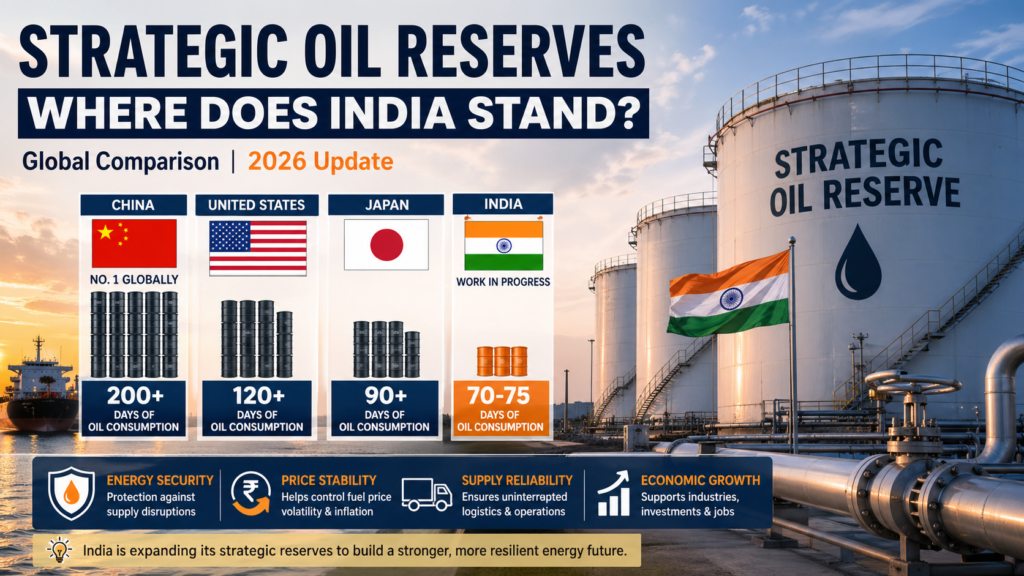
In a world increasingly shaped by geopolitical tensions and energy uncertainties, strategic oil reserves have become a critical safeguard for economic stability. Recent global developments highlight how countries like China, the US, and Japan are strengthening their oil stockpiles. For businesses and policymakers in India; especially in industrial hubs like Pune and PCMC, understanding India’s position in global energy security is vital for long-term planning, cost management, and risk mitigation.
Global Leaders in Strategic Oil Reserves
Countries across the world maintain Strategic Petroleum Reserves (SPR) to cushion against supply shocks, price volatility, and geopolitical disruptions.
- China currently holds the largest oil reserves globally, with aggressive stockpiling strategies over the past decade.
- The United States maintains one of the most structured SPR systems, historically used during crises like wars or supply disruptions.
- Japan, despite limited natural resources, has built significant reserves to ensure energy independence.
These nations typically maintain reserves covering 90 to 200+ days of oil consumption, providing a strong buffer against global uncertainties.
For businesses globally, such reserves stabilize fuel prices, logistics costs, and overall inflation expectations; factors that directly impact profitability.
India’s Position: Progress with Limitations
India, as the world’s third-largest oil consumer, has been actively building its strategic reserves, but still lags behind global leaders.
- India’s current reserves (including commercial and strategic) cover approximately 70–75 days of consumption, significantly lower than developed economies.
- Dedicated strategic reserves alone account for roughly 9–10 days, stored at locations like Visakhapatnam, Mangaluru, and Padur.
- The government is expanding capacity under Phase II projects, including new storage facilities.
While India has made steady progress, its dependence on crude oil imports (over 85%) makes it vulnerable to external shocks such as Middle East conflicts or supply chain disruptions.
From a business standpoint, this translates into:
- Higher exposure to fuel price volatility
- Impact on transportation and logistics costs
- Indirect effect on inflation and interest rates
Why Strategic Oil Reserves Matter for Indian Businesses
Strategic reserves are not just a government-level concern. They directly influence business economics.
Key implications:
- Cost Stability: Adequate reserves help stabilize fuel prices, reducing unpredictability in operating costs
- Supply Chain Reliability: Ensures uninterrupted logistics even during global disruptions
- Inflation Control: Lower fuel shocks help maintain stable input costs across industries
- Energy Security: Supports long-term industrial growth and investor confidence
For MSMEs and manufacturing units in Maharashtra, fuel cost fluctuations can significantly impact margins, especially in logistics-heavy sectors like printing, fabrication, and distribution.
India’s Way Forward: Expansion & Diversification
India is actively strengthening its energy security through:
- Expansion of SPR capacity (Phase II projects)
- Public-private partnerships for storage infrastructure
- Diversification of crude import sources
- Push towards renewable energy and ethanol blending
These measures aim to reduce dependency risks and improve resilience against global energy shocks.
However, compared to China’s aggressive reserve-building and the US’s mature infrastructure, India still has considerable ground to cover.
What are Strategic Petroleum Reserves (SPR)?
Strategic Petroleum Reserves are government-maintained crude oil stockpiles used during emergencies like supply disruptions, wars, or extreme price volatility.
Why are SPRs important for India?
They help reduce the impact of global oil shocks on the Indian economy, stabilizing fuel prices and ensuring supply continuity.
How much oil reserve does India currently have?
India has reserves covering approximately 70–75 days of consumption, including both commercial and strategic stocks.
How does India compare globally?
India lags behind countries like China, the US, and Japan, which maintain significantly higher reserve coverage.
When will India expand its reserves further?
Expansion is underway under Phase II projects, with new facilities expected in the coming years.
FAQs
1. How do oil reserves impact fuel prices in India?
Higher reserves help cushion sudden global price spikes, reducing volatility in domestic fuel prices.
2. Are India’s current reserves sufficient during a crisis?
They provide short-term relief but may not be sufficient for prolonged global disruptions compared to developed nations.
3. Where are India’s strategic oil reserves located?
Major locations include Visakhapatnam, Mangaluru, and Padur, with more facilities planned.
4. Does India rely heavily on oil imports?
Yes, India imports over 85% of its crude oil requirements, making energy security crucial.
5. How can businesses prepare for fuel price volatility?
Businesses can adopt cost optimization strategies, diversify suppliers, and improve operational efficiency.
6. Will renewable energy reduce dependence on oil reserves?
Yes, in the long term. However, oil will remain critical for several industries in the near future.
This evolving global energy landscape makes one thing clear. Strategic preparedness is no longer optional. For Indian businesses, staying informed about such macroeconomic shifts is essential for making resilient and future-ready decisions.